
If you’ve ever wondered how to turn your passion for healthcare, technology, and data into a rewarding career, the Registered Health Information Administrator (RHIA) credential might be your golden ticket. Administered by the American Health Information Management Association (AHIMA) , this certification is more than just a resume booster—it’s a career accelerator. But before you dive into the certification examination , let’s break down what it takes to earn this prestigious credential, why it matters, and how it stacks up against alternatives like the RHIT (Registered Health Information Technician) .
Why the RHIA Certification Matters in Today’s Healthcare World
Healthcare runs on data. From electronic health records to patient health information and medical records , the industry relies on professionals who can manage, protect, and analyze this critical information. That’s where RHIA-certified experts shine. They ensure the accuracy, privacy, and accessibility of protected health information while navigating complex ethical and legal requirements .
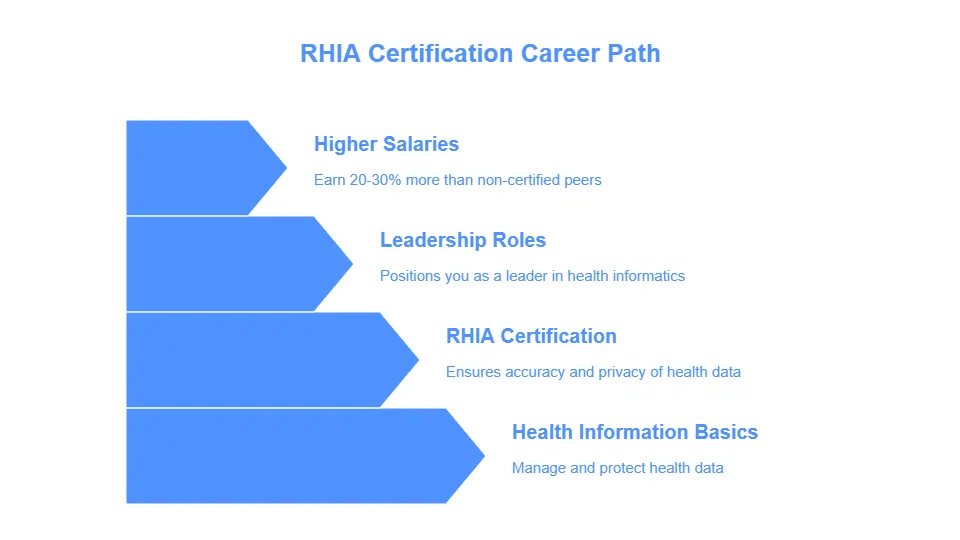
With hospitals, insurers, and tech companies scrambling to hire skilled medical and health services managers , the RHIA credential positions you as a leader in health informatics and information management . According to AHIMA, professionals with this certification often land roles like:
- Health Information Director
- Compliance Officer
- Clinical Documentation Specialist
- Data Analytics Manager
And here’s the kicker: RHIA-certified professionals earn 20–30% higher salaries than their non-certified peers. For example, while a bachelor’s degree in health information might get you in the door, adding the RHIA certification could boost your earnings from $60,000 to over $90,000 annually.
Read More https://prepare4test.com/epic-certified/
What It Takes to Earn Your RHIA
Academic Requirements: The Foundation
To even sit for the RHIA exam , you’ll need to graduate from an HIM program that’s accredited by the Commission on Accreditation for Health Informatics and Information Management (CAHIIM) . This typically means completing either:
- A bachelor’s degree in health information management
- A master’s degree in health informatics (for those with a related undergraduate degree)
These programs cover everything from knowledge of medical terminology and classification systems to data management and health information systems . The goal? To ensure you have comprehensive knowledge of medical , legal, and technical standards.
Pro tip: If you’re outside the U.S., check if your program is approved by a foreign association with which AHIMA has a reciprocity agreement. This can streamline your path to certification.
The RHIA Exam: Your Ultimate Test
Once you’ve met the academic requirements of a health information management program, it’s time to tackle the certification exam . Here’s what you need to know:
- Cost of the RHIA exam : Around $300–$500 for AHIMA members (non-members pay more).
- Format : 150–160 multiple-choice questions covering domains like privacy of protected patient information , health data analytics , and knowledge of information technology .
- Pass rates : Roughly 70% for first-time test-takers, but this drops significantly for non-native English speakers.
Studying is non-negotiable. Many candidates use mock exams to gauge readiness. Research shows scoring above 51% on practice tests correlates with a 65% chance of passing the real deal.
Read Also https://prepare4test.com/product-category/ahima/registered-health-information-administrator/
RHIA vs. RHIT: Which Certification Fits Your Goals?
Not sure if the RHIA credential is right for you? Let’s compare it to its sibling certification, the RHIT , in this handy table:
| Factor | RHIA | RHIT |
|---|---|---|
| Education Required | Bachelor’s degree or higher | Associate’s degree |
| Focus | Leadership, analytics, compliance | Technical coding, data entry |
| Average Salary | $85,000–$120,000 | $50,000–$70,000 |
| Recertification CEUs | 30 every 2 years | 20 every 2 years |
| Ideal For | Aspiring managers | Entry-level specialists |
While the RHIA certification demands more upfront investment, it opens doors to leadership roles. The RHIT , on the other hand, is a solid starting point for those eyeing medical coding or health record management.
Career Impact: Where RHIA Certification Can Take You
Earning your RHIA isn’t just about passing an exam—it’s about transforming your career. Here’s how:
- Versatility : RHIAs work in a variety of settings, from hospitals to tech startups.
- Demand : The U.S. faces a shortage of 72,000 medical and health services managers , and RHIAs are primed to fill this gap.
- Salary Growth : Positions like Health Information Director often pay six figures, especially with expertise in data analytics or information technology .
But it’s not just about the money. RHIAs play a critical role in improving patient care. By ensuring clinical documentation accuracy and safeguarding patient health data , they reduce medical errors and streamline care coordination.
The Challenges: What to Watch Out For
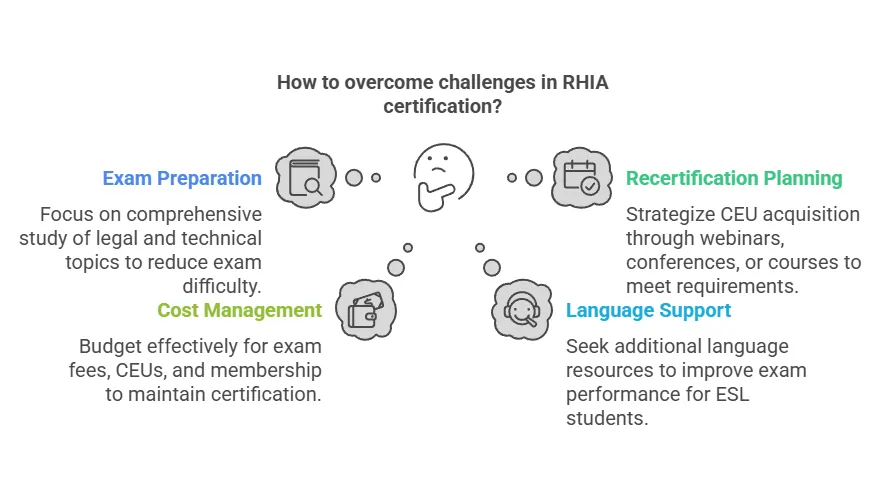
Let’s keep it real—the RHIA certification isn’t a walk in the park. Common hurdles include:
- Exam Difficulty : The sheer breadth of topics, from legal requirements to computer information systems , can overwhelm unprepared candidates.
- Recertification : You’ll need 30 continuing education units (CEUs) every two years. Think webinars, conferences, or post-baccalaureate courses.
- Costs : Between exam fees, CEUs, and AHIMA membership, expect to spend $500+ annually to maintain your credential.
Non-native English speakers face an added challenge. Studies show over half of ESL students fail their first attempt, even with strong technical skills.
Is the RHIA Certification Worth It?
If you’re committed to advancing in health informatics , the answer is yes. The RHIA credential signals expertise in health information systems , privacy laws , and data management —skills that healthcare employers desperately need.
But if you’re new to the field, consider starting with the RHIT certification or an HIM certificate to build experience. Remember, AHIMA offers reciprocity agreements with some international programs, so global professionals aren’t left out.
People Also Read https://prepare4test.com/exam/rhia-dumps/
Final Thoughts: Your Next Steps
Ready to take the RHIA exam ? Here’s your roadmap:
- Enroll in a CAHIIM-accredited program .
- Master classification systems , clinical documentation , and data analytics .
- Crush the exam with practice tests and study groups.
- Stay certified through continuing education units and networking.
For more details, visit AHIMA’s official RHIA certification page or explore master’s degree programs in health informatics to supercharge your credentials.
Whether you’re drawn to patient health information or excited by information technology to health care innovations, the RHIA certification is your launchpad. So, what are you waiting for? The future of healthcare organizations needs you.
FAQs
What is an RHIA License Certification ?
The RHIA License Certification is a professional credential that signifies an individual’s expertise and competency in managing health information and medical records. It is a vital certification for those pursuing a career in health informatics and information management education . The credential demonstrates an understanding of patient data management, certification for health informatics principles, and the legal aspects of health information.
Who administers the RHIA Certification Exam ?
The RHIA Certification Exam is administered by the Commission on Certification for Health Informatics and Information Management (CCHIIM). This body ensures that the exam meets the standards required for professional certification in the field. Successfully passing the exam is essential to become a certified RHIA .
What are the eligibility requirements for the RHIA Certification Exam ?
To be eligible for the RHIA Certification Exam , candidates must complete the baccalaureate-level academic requirements from a program accredited by the commission on Accreditation for Health Informatics and Information Management Education (CAHIIM). Alternatively, individuals can qualify if they have completed a program approved by a foreign association with an HIM education program.
How can I get certified as an RHIA?
To get certified as an RHIA, you must meet the educational prerequisites and pass the RHIA Certification Exam . Completing a program in health information management accredited by CAHIIM is crucial. After meeting these requirements of an HIM certificate , you can register and complete the RHIA exam .
What topics are covered in the RHIA Certification Exam ?
The exam encompasses various subjects including health data management, health statistics and research, information technology and systems, organization and management, and the legal aspects of health information. A profound understanding of patient data and its governance is critical for passing the exam.
Are there AHIMA Certifications other than RHIA?
In addition to RHIA certification , there are several other AHIMA certifications available for professionals related to health information management. These include the Registered Health Information Technician (RHIT), Certified Coding Specialist (CCS), and Certified Health Data Analyst (CHDA), among others, which provide a national certification in their respective areas.
For those pursuing becoming a Registered Health Information Administrator, it’s crucial to complete the academic requirements through accredited educational programs . RHIA work involves applying technology to health care employers to manage patient data and ensure compliance.

